AI Tools & Automation News: The Rise of Agentic Workflows for SMBs
2026 marks a turning point as small businesses move from simple chatbots to autonomous agents. Discover the latest updates from OpenAI, Meta, and others, and how you can lead this transition as an AI consultant.
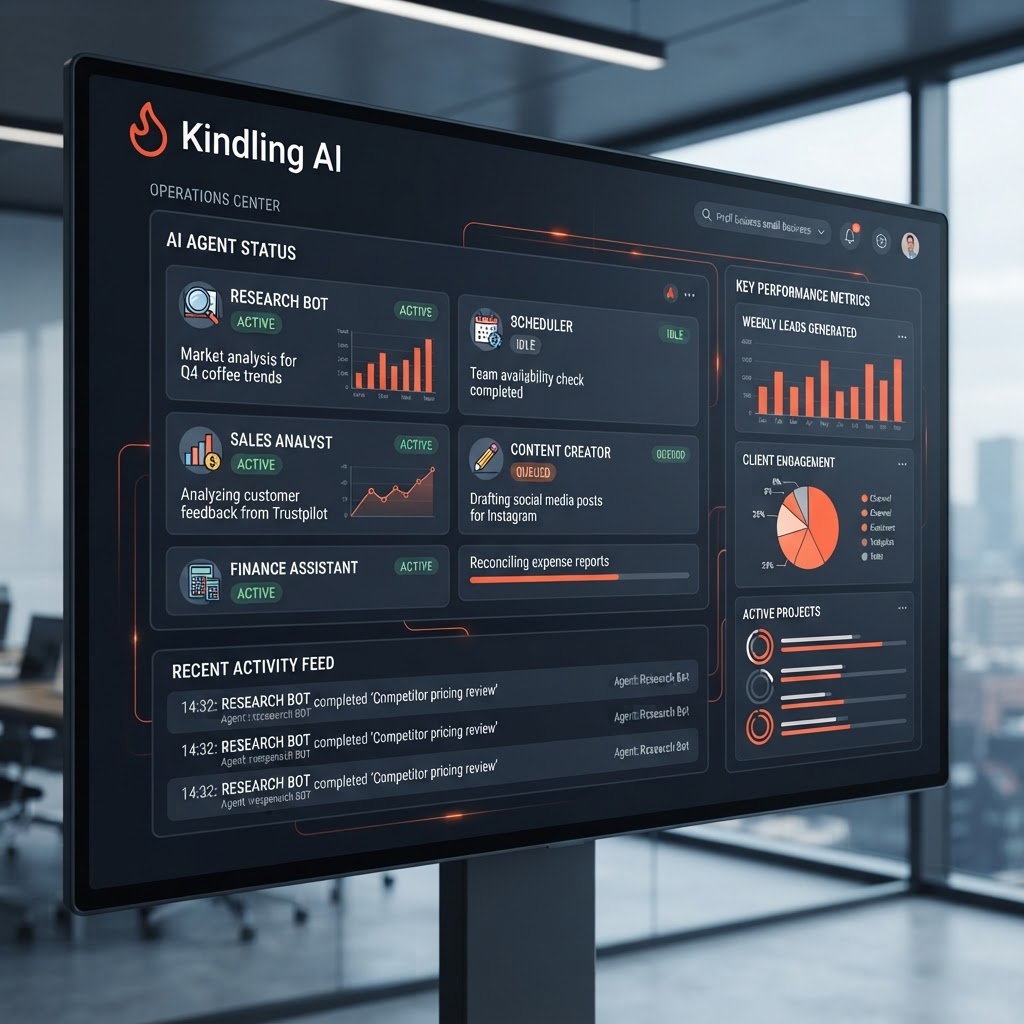
AI Tools & Automation News: The Rise of Agentic Workflows for SMBs
The landscape for small business automation is shifting rapidly. In the past, AI was something you talked to; in 2026, AI is something that works for you. We are moving from the era of 'Chatbots' to the era of 'Agents,' and for AI consultants, this transition represents the single greatest opportunity to provide ongoing value to clients. Businesses need AI help, and with the latest batch of updates from major players like OpenAI and Meta, you can be the person they call to turn these tools into tangible ROI.
OpenAI Launches 'ChatGPT Work' and Scheduled Tasks
The most significant update in the world of ChatGPT updates is the launch of 'ChatGPT Work.' This isn't just a new UI; it introduces a fundamental shift in how businesses interact with Large Language Models. The standout feature is 'Scheduled Tasks,' which allows the AI to run on a specific trigger or a repeating schedule. Imagine a small marketing agency that needs a daily summary of industry trends or a weekly audit of their client's social media mentions. Previously, a human had to manually prompt the AI every time. Now, consultants can set up these autonomous workflows once, allowing the system to perform research and document creation in the background.
As a consultant, this allows you to move away from one-off prompt engineering toward 'Workflow Orchestration.' You aren't just selling a prompt; you are selling a digital employee that delivers a report every Monday at 9:00 AM. This creates a powerful argument for monthly retainer services, as these agents require monitoring, refining, and updating as business needs evolve.
SMB Adoption Surpasses 50% in 2026
New data regarding AI for business news shows that small business adoption of AI agents has officially surpassed the 50% mark this year. The message is clear: the early adoption phase is over, and AI is now a mainstream business requirement. The research indicates that businesses are moving away from manual SaaS coordination—where a human manually moves data between tools like Slack, Salesforce, and Gmail—toward autonomous workflow orchestration. When over half of your potential clients are already looking for ways to automate, your job as a consultant changes from 'convincing' to 'implementing.'
Martech & Productivity Tool Upgrades
The ecosystem of new AI tools 2026 is expanding beyond just the big labs. ActiveCampaign has introduced 'Active Intelligence: Wavelength,' a system designed to automate complex email marketing and customer journeys with minimal manual input. Instead of building every step of an automation tree, users can define a goal, and Wavelength orchestrates the sequence dynamically based on customer behavior. Similarly, Meta has updated its Muse Spark model to version 1.1. With a massive 1-million-token context window and a new paid developer API, Muse Spark is now a viable contender for enterprise-level automation within the Meta ecosystem, allowing for the analysis of vast amounts of customer feedback or internal documentation in a single pass.
Mainstream productivity tools are also deepening their integrations. Asana and Notion have moved beyond simple text generation to integrated AI features that can draft entire project plans, summarize team capacity, and answer complex questions based on a company’s internal knowledge base. For the AI consultant, these AI platform news updates mean that the 'stack' you recommend to a client is becoming more powerful and interconnected than ever before.
The Critical Role of Governance and Security
Despite these advancements, the rise of agentic workflows brings new risks. Data security remains a primary concern for small business owners. Specifically, there are ongoing questions about whether sensitive business data stored in 'Projects' within these AI platforms could be accessed by competitors or used for model training. Furthermore, while tools like Make or n8n are becoming more powerful, the complexity of multi-step automations requires 'deep project governance.' A broken automation can cause a cascade of errors across a business. This is why professional oversight is more necessary than ever. Consultants must ensure traceability—the ability to see exactly why an AI agent made a specific decision—to protect the client’s operations.
Actionable Steps for AI Consultants
The AI automation updates of 2026 are not just cool features; they are the building blocks of a new type of service business. To capitalize on this, you should focus on three areas: 1. Diagnose recurring manual tasks that can be replaced by ChatGPT Work's Scheduled Tasks. 2. Implement 'Context-Rich' systems using models like Muse Spark 1.1 that can handle large datasets. 3. Offer 'AI Governance' packages that ensure client data is secure and automations are reliable. You can learn how to find clients, diagnose their needs, and recommend simple yet powerful AI solutions that businesses are willing to pay for by getting the right resources.
Ready to start your journey as a highly-paid AI expert? Get the Starter Kit and begin building agentic workflows for your clients today.
Get the Starter Kit
Get the Starter Kit